Give Others Your Respect.
Give Others Your Vulnerability.
Give Others Your Care.
Give Others Your Passion.
Give Others Your Experience.
Give Others Your Help.
When a flight hits a patch of turbulence, almost every passenger does the same thing--look to the nearest flight attendant. Their reaction to the situation informs whether, and how much to panic. As the CEO or leader of a company, when you hit a rough patch, your employees look to you to set the tone.
Being in a leadership role requires wearing many hats. From adjusting to employees' desire for better work-life balance to combating supply chain disruptions to prioritizing mental and emotional wellness. It can be overwhelming and not everyone is suited to it, but there are practices that leaders can employ to help steer their ship--and crew--through rough waters.
When thinking about the most helpful, effective ways to address your team members' questions and concerns during times of uncertainty, it helps to put yourself in their shoes. To get into the correct frame of mind, ask yourself general and specific questions like, "What would my biggest concerns be if I were in this situation?" or "What would I be thinking or feeling if I were the sole provider for my family?"
Be honest. You want to be inspirational and keep things positive, but if it's not sincere, that will show. Furthermore, if trying to be upbeat conflicts with the reality of a situation, it will come off as tone-deaf.
Revisiting the flight attendant analogy, think about what they tell you before take-off: put your oxygen mask on first before helping others. This rule applies to anyone in a leadership position. If you don't take care of yourself, you'll end up being useless to those who rely on you.
A common mistake made among leaders is carrying the burdens of their employees. For empaths, it happens organically; for others, it is often a result of conflating leadership and compassion. One approach to helping employees address a problem is to actively listen and support them as they talk through their own problem-solving process. Alternatively, you might suggest other resources that can help them tackle the challenges they're facing.
When faced with difficult scenarios and decisions that will significantly impact your business, a natural gut reaction--especially for a highly visible person--is to want to save face. I've been there myself, several times, and each time has reinforced that a "we" mentality always wins because the truth is that you're only as strong as your employees. And when you are at the helm of the thing responsible for feeding, clothing, and providing homes for them and their families, your ego needs to take a seat in the way back.
I put my employees first, not just during hard times, but every day. Because without them, there is no business, and I make sure to tell them that as often as I can. So far, it's paid off.
Because of the lessons, I learned as a new business navigating the outset of the dot-com bubble burst, as soon as the Covid-19 pandemic hit, I knew we had to preserve cash if we were to survive. Even after cutting my pay to zero and my two most senior executives cutting their pay in half, it wasn't nearly enough to make an impact. I considered a reduction in force--a permanent elimination of positions--but the thought of letting 25 percent of my people go at all, let alone just to survive, didn't work for me. In the end, the most sufferable decision was to cut everyone's pay by 25 percent.
I expected my employees to be upset, even angry; instead, I received thank-you notes detailing how grateful they were to work for Dotcom Distribution. In hindsight, I made the best decision I could have. The silver lining is that, because our sector was deemed essential, I was quickly able to not only restore everyone's salaries to 100 percent, but I was also able to pay back the 25 percent, too.
While there is a time and place to fake it 'til you make it, other times call for being honest about what you don't know or what's on the other side of an event or decision. Be open about not having all the answers and acknowledge that you will stumble as you find your way in the short term. Be clear, though, that you are committed to long-term success and this journey you're all on together will only strengthen the company.
Challenging, stressful situations bring out the best and worst in people, and giving everyone what they need is a nearly impossible task. The best you can do--for your employees and yourself--is to lead with compassion, tolerance, humility, and honesty.
Instagram has quickly found itself at the top of the social media charts, as it now has over a billion active users, and is generating millions of dollars in advertising spend on a daily basis. With so many users now focused on this one social platform, the concept of getting millions of followers is no longer a distant dream.
If you’re looking for ways to increase your Instagram followers, we are going to be covering some of the most effective ways to get the job done right, while also increasing your chances for seeing daily growth month after month. Methods we will cover include post frequency, include trending hashtags in your posts, and partner with top influencers and brands.
Don’t forget to share these tips with your followers and start seeing results! You’ll be amazed at the difference they can make!
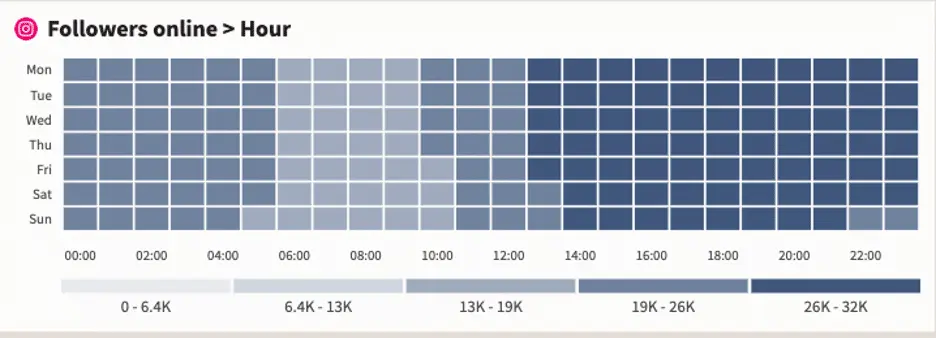
If you are new to the social media platform, one of the most effective Instagram growth methods for beginners is to post regularly and consistently. A post that features a step-by-step recipe video or a photo of a popular coffee shop may perform better outside of business hours. Posting during slump hours can boost engagement. Observe your audience’s behavior and experiment with different times to see which is best. Then, if necessary, alter your schedule.
A visual planner is a great tool to use when it comes to establishing your style and creating shareable content. Start by creating a monthly schedule three posts every week. You can use free templates to follow popular post styles and other brands. Alternatively, consider purchasing a full pack that includes several templates with consistent visual themes. While posting more often will increase your engagement, quality should always come first.
When it comes to growing your following on Instagram, there are several methods that can help you grow your audience quickly. One of the most basic growth methods is to use trending hashtags in your posts. Using hashtags in your posts increases the chances that your posts will be viewed by many users and increase your brand awareness. Trending hashtags are also great for promoting your brand. They are a great way to get more exposure for your posts and profiles.
You can find these hashtags by searching for them on the app. People who use these hashtags will find your post and might even follow your Instagram account. Use hashtags that are relevant to the content of your posts, but avoid overusing them. For example, if your post is about summer, don’t use the hashtag #summer. Instead, use hashtags related to your subject matter. A good example is to use #selfie on a photo of beautiful landscapes.
While social media management is a time-consuming process, you can simplify the process with the use of a social media scheduling tool. Social media scheduling tools can help you manage multiple accounts simultaneously, helping you push out more content to your followers. If you’re new to social media, you can also use a social media scheduling tool to manage your whole team. With tools like these, you can schedule content in advance and save time while keeping your followers engaged.
Using a social media scheduling tool for your Instagram account can save you time by automating your posts. Social media is always on, and it’s important to plan ahead. By scheduling posts in advance, you give yourself more time to focus on other aspects of your business, like improving your website’s performance. In addition to automating your posts, social media scheduling tools can also help you monitor your engagement and performance metrics. Sprout’s scheduling capabilities are unrivalled, and their customers love the tool.
There are many ways to grow your Instagram account, and partnering with brands and top influencers can help you do just that. As an influencer, you can reach a new audience and strengthen your customer acquisition strategy. While a successful influencer can increase your followers, you also need to explain your brand and product to them. The truth is that influencers are incredibly protective of their audiences, but their reach and trustworthiness can speak volumes.
When approaching brands for collaborations, make sure you know the brand’s audience and niche. This is vital for building your audience and landing brand sponsorships. By targeting brands who fit your audience, you’ll ensure that your collaborations will be both profitable and beneficial for all involved. It’s also important to include your follower count in your profile so that prospective brands can quickly assess your outreach potential.
One of the best ways to increase interaction on Instagram and other social media sites is to ask your followers to respond to your posts. You can use relevant quotes and lyrics and be creative when writing your captions. For example, you could ask your followers to like or comment on a post by offering a testimonial or asking them to share their experience with others. Another effective way to get more interaction on Instagram is to add an overlay text to your images. An example of a caption would be “what’s your favorite beauty DIY project?”
When posting to your Instagram page, don’t forget to mention that you have a competition running. When posting a competition on Instagram, make sure to mention that the winner will receive a free bottle of drink. If you’re hosting a contest, make sure to mention that each person who enters is required to like a post. This way, only the people who are interested in your topic will like it.
One of the most effective ways to grow your Instagram following is to reach out to influential free users and pay them to post your sponsored content. You can pay influencers $20 for sponsored posts, depending on how big of an audience they have. Leaving comments on a free influencer’s post will be more authentic and result in more engagement and follower counts. To keep the conversation relevant, you can leave a comment with a direct link to the product.
The first thing you can do to increase your Instagram following is to follow influencers in your niche. By following these individuals, you will be able to access a larger audience. But remember to be careful, as you may face temporary bans. If you’re not careful, you may find yourself banned for days or even weeks. But this isn’t the end of the world. Once you’ve established a presence in the community, you can continue to use these methods to grow your account.
If you’re a beginner to Instagram, you may not be sure which times to post to make your content more visible. However, you can use a scheduling tool such as Hootsuite to figure out the optimal time to post. The app will analyze your audience and suggest the best times to post. Once you’ve established these times, you can then try to adjust your schedule to accommodate these times. However, keep in mind that your posts should be relevant to your audience.

When you’re posting, try to post to your audience at a time when they’re most active. If your audience tends to browse their feed early in the morning, post during their peak hours. If you can manage to post at 3:00 AM, your post may go viral. The optimal times to post are dependent on your audience and location. You’ll find out the best times to post by testing them.
The first step in running a paid Instagram ad campaign is to determine your audience. This may be easier said than done, but a little research can go a long way. You can use an objective to target your ideal audience or choose specific placements. Facebook allows you to target users who are most likely to convert – for instance, if you’re promoting a local restaurant.
When setting up your ad, make sure to keep in mind that users often scan their feeds and stories. That means you want to make your first few seconds count. You should also track performance metrics like click-through rate, impressions, and bounce rate. Ultimately, your goal should be to increase sales. And remember that you can always adjust your ad based on your results, too.
You can also use Saved Audiences to optimize your Instagram ads. This feature lets you select specific audiences based on their interests. Choose “Engaged shoppers” if you want to target users who are already interested in buying your products. Otherwise, choose “Other” for a broader audience and increase your chances of success. If you don’t want to target specific audiences, try the “Connections” option. This option is especially useful for beginners.
As we mentioned at the beginning of the article, with over a billion users on the platform, it can become quite a saturated place and it’s going to be easy to get lost in the mix. However, when done properly, IG can be one of the most effective ways to grow a business or brand online.
Be sure to follow each of the actionable tips listed above, and don’t forget to take a look at all of the latest content on the main page of the blog. New social media tools and resources guides are being published daily.
Advances in information technology, pandemic-driven social-distancing, the fierce competition for talent and near-record high inflation are forcing business leaders to rethink where and how their organizations work.
If companies allow people to work from home, they can save money by reducing office space and helping inflation-pinched workers to hold onto the cash they would otherwise spend on commuting while giving them more control over how they spend their time.
If you manufacture physical goods or provide an in-person service, your people must work inside and your company has to own or lease the buildings where your company gets work done.
If your company provides a service based on software or entertaining, educating, or informing your customers, you may be able to operate without owning or leasing real estate.
In this case, ask whether your most talented people prefer to work close to others or at home. Even if your people prefer to work from home, you may still want to rent spaces where they can get together occasionally to brainstorm growth ideas or reinforce your company's culture.
To help business leaders think through these questions, here are four models to consider based on Boston-area companies that are grappling with these questions.
What should you do if you have locked in more space than you need through a long-term lease? One possibility is to redesign the fraction of the space that is occupied and lease out the rest.
That is what Cambridge, Mass.-based Internet service provider Akamai Technologies is doing with the "gleaming headquarters" it moved into a few months before the pandemic began, according to the Boston Globe. Akamai has locked in a $700 million, 15 year lease on the space while letting 95 percent of its people work remotely as long as they want.
Akamai's solution is to reconfigure most of its floors and lease out the rest. Specifically, the company is setting up a plan in 15 of its 19 floors which gives a dedicated desk to each employee who comes in four days a week or more and offers unassigned seating to the rest. The other four floors will be subleased to tenants, noted the Globe.
Boston-based financial services provider, State Street, is building a new headquarters which it intends to occupy in 2023.
State Street's new office design will include four kinds of workstations depending on what in-office workers are doing. According to the Globe, these include, "a standard desk; a pod-style bench area with no computer monitors to distract from collaborative work; heads-down desk space with short dividers that limit interaction with others; and airport-lounge style spots with no power outlets, allowing for a quick sit with nice view but not a place to post up all day."
To its credit, State Street will experiment with this configuration to determine how well it fosters the in-office work outcomes it is seeking to achieve.
What if your company is locked into a long-term lease with too much space and workers who can do their jobs from home and don't want to commute? You could provide incentives for them to come to the office.Cambridge-based automotive shopping service,
CarGurus -- which is stuck with a 225,000 square foot headquarters lease in Boston's tony Back Bay -- is offering its employees such a deal. In exchange for coming to the office twice a week, workers get a $15 lunch stipend, free parking, and a local gym membership, according to the Globe.
CEO Jason Trevisan fears that an all-Zoom work culture could impede mentorship, employee engagement, and efficiency. It remains to be seen how many CarGurus workers will be willing to pay for the gasoline to commute twice a week.
The most creative solution I've seen is to tailor the office experience to each worker. That's what Matt Carroll, CEO of Boston-based software company Immuta, is doing. During the pandemic, Immuta -- which leased a 16,000-square-foot office in Boston's Seaport District -- grew "from about 15 employees to more than 60," wrote the Globe.
Carroll likens his employees to birds. As he told the Globe, "Eagles make quick decisions, owls prefer to hunker down in silence, parrots enjoy collaborating with others. No one team, no two employees are quite the same."
Bob Boule, an Immuta employee who strikes me as a parrot, gets up early to make a long commute into Boston several days a week so after work he can have "a beer with a colleague or head to a Red Sox game," noted the Globe.
Which of these four models works best for your company?